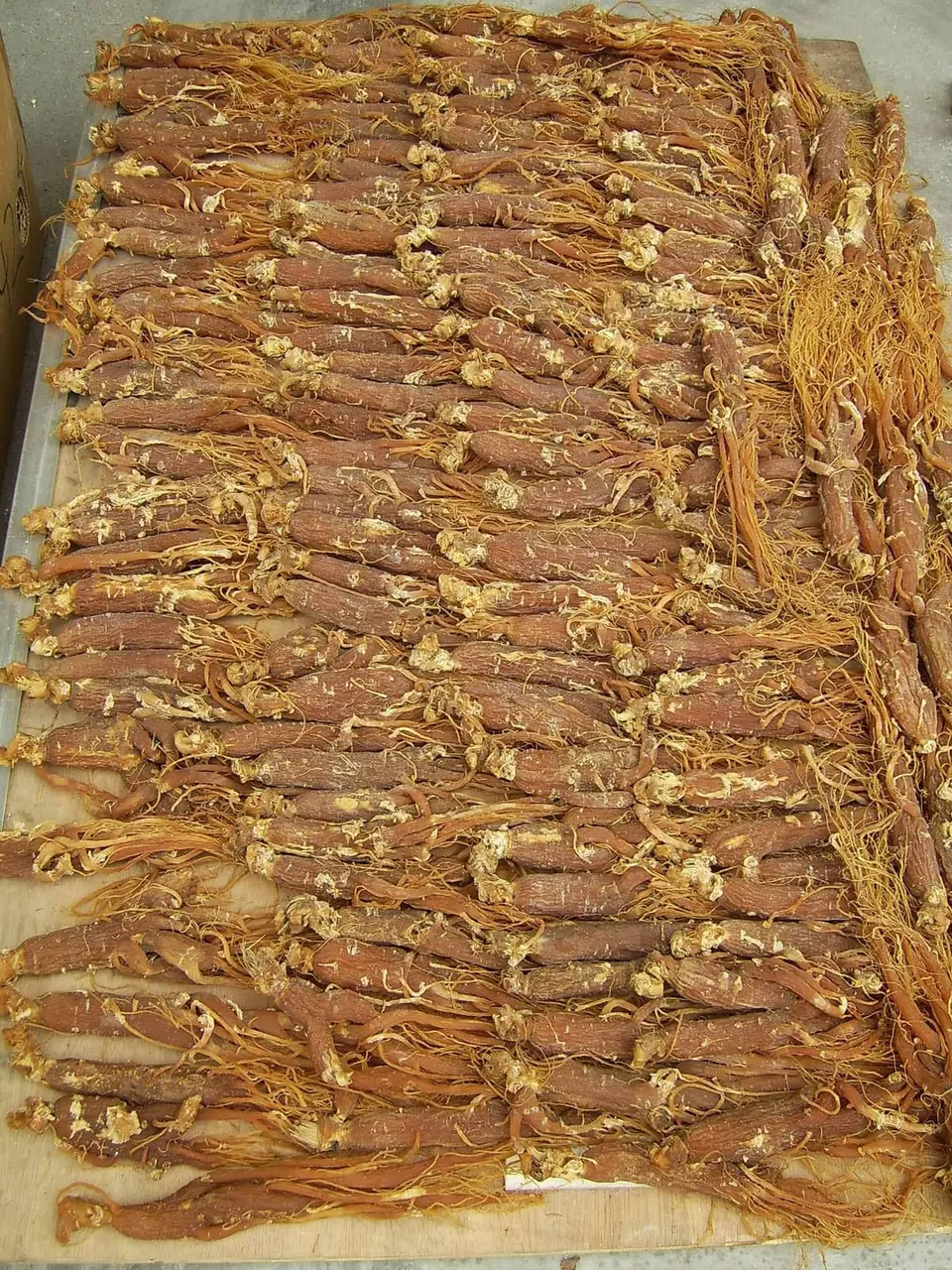
Panax ginseng has been used for centuries to restore vitality and strength. This root helps you reclaim your edge by supporting the systems that manage energy and metabolic health. You can use this ancient record of strength to support a healthy weight and a more active lifestyle.
It Helps You Manage Blood Lipids
Maintaining healthy lipid levels is a key part of managing your weight and cardiovascular health. A 2026 network meta-analysis of 123 trials in 8,595 adults found that Korean red ginseng significantly reduced triglycerides compared to placebo (Sairaj 2026). This result supports the use of the root for metabolic health.
Fermented versions of the root also show strength in lipid management. A 2024 randomized trial of 65 adults with dyslipidemia found that 12 weeks of fermented red ginseng product supplementation resulted in lower triglyceride levels compared to placebo (Lim 2024). This demonstrates the root's ability to improve lipid metabolism.
These effects contribute to a healthier internal environment. By supporting the way your body processes fats, the root helps you maintain the metabolic efficiency of your youth.
The root also shows strength in animal models of obesity. A 2018 meta-analysis of 16 studies found that oral administration of Panax ginseng significantly inhibited weight gain and improved serum lipid profiles in animal obesity models (Park 2018). The intervention group had a significantly higher serum HDL level and lower serum LDL, TG, and TC level than the control group. This result highlights the root's capacity to support a healthy lipid profile.
It Supports Glycemic Control
Stable blood sugar is essential for maintaining energy and preventing the crashes that lead to overeating. A 2021 randomized trial of 104 participants with type 2 diabetes found that a combination including 0.75 g of Korean red ginseng and 1.5 g of American ginseng reduced HbA1c levels by 0.27% more than the control group over 24 weeks (Zurbau 2021). This combination is well tolerated and improves glycemic control.
The root works with your body to manage how glucose is used. This support helps you avoid the fatigue associated with blood sugar swings. You can find more about this in our guide on blood glucose.
Consistent glycemic support allows you to maintain a steady level of performance throughout the day. It helps you stay focused and energized without the volatility of age-related decline.
It Reduces Fatigue in Overweight Adults
Fighting the exhaustion that comes with weight gain is the first step toward a more active life. A 2016 randomized trial of 80 patients with nonalcoholic fatty liver disease found that Korean red ginseng significantly decreased fatigue scores in overweight patients (Hong 2016). This study also found that the root increased adiponectin levels.
Reducing fatigue allows you to engage in the physical activity necessary for weight management. When you feel less tired, you have the energy to push your limits. This is a primary benefit of the root's use for thousands of years (Jin 2020).
The root also helps lower proinflammatory cytokines. In the same 2016 study, the Korean red ginseng group showed a significant reduction in tumor necrosis factor-alpha compared to the placebo group (Hong 2016). This reduction in inflammation supports overall vitality.
The root works by regulating the body's internal chemistry to fight exhaustion. A 2020 systematic review found that Panax ginseng and its compounds significantly increase the level of glucose and glutathione peroxidase in serum (Jin 2020). It also increases the level of glycogen and activity of catalase in skeletal muscle. These changes provide the fuel and protection needed to maintain a high level of physical activity.
It Improves Quality of Life During Weight Loss
The mental struggle of managing weight is often as difficult as the physical one. A 2012 randomized trial of 50 obese women found that Korean red ginseng significantly improved the obesity-related quality of life scale compared to placebo (Kwon 2012). This improvement helps you stay committed to your health goals.
Many users say the root provides a mental lift that makes a healthy lifestyle easier to maintain. It helps you face the challenges of age-related decline with confidence.
By improving your overall sense of well-being, the root makes the journey toward a healthy weight more sustainable. You can learn more about this in our guide on ginseng for stress.
It Supports Cardiovascular Performance
A healthy weight is most effective when paired with a strong heart and clear arteries. A 2014 randomized crossover trial of 23 healthy adults found that 400 mg of Rg3-enriched Korean red ginseng acutely lowered central and peripheral arterial pressures (Jovanovski 2014). This result shows the root's ability to modulate vascular function.
Another 2010 trial of 17 healthy individuals found that 3 g of Korean red ginseng significantly lowered the radial augmentation index by 4.6% compared to placebo (Jovanovski 2010). This indicates an improvement in arterial stiffness.
Better circulation means more oxygen and nutrients reach your muscles during exercise. This efficiency allows you to burn more energy and improve your physical performance. For more details, see our guide on ginseng and circulation.
The root helps regulate the flow of essential fatty acids. A 2014 randomized trial of 93 postmenopausal women found that fermented red ginseng capsules significantly changed the path coefficients of cortisol and the branchial pulse for free fatty acids compared to placebo (Lee 2014). This modulation of fatty acid flux supports the metabolic health of the cardiovascular system. It ensures your body uses its energy stores efficiently.
How Much to Take
The dosage used in clinical trials varies depending on the desired outcome. For metabolic and lipid support, studies have used doses such as 6 g of Korean red ginseng rootlets daily over 12 weeks (Cho 2013). Other trials for quality of life in obese women used Korean red ginseng for 8 weeks (Kwon 2012).
For acute vascular benefits, a dose of 400 mg of Rg3-enriched extract was used to lower blood pressure (Jovanovski 2014). These varied amounts show the root's versatility across different health goals. You can find more guidance in our ginseng dosage guide.
While some people report mild side effects, the overall record of use is one of strength and safety. This long history of use ensures a reliable experience for the user.
Different preparations offer different strengths for your health goals. A 2011 randomized study used 200 mg of Panax ginseng one hour before exercise to test endurance in a hot and humid environment (Ping 2011). This specific dose was used to evaluate the root's effect on plasma insulin and glucose levels during exertion. Such targeted dosing allows you to align the root's strength with your daily performance needs.
It Boosts Your Physical Endurance
The ultimate goal of a healthy weight is the ability to perform at your peak. A 2011 randomized study of Malaysian runners found that a combined dose of 200 mg of Panax ginseng and 5 mg/kg of caffeine significantly improved endurance running performance compared to placebo (Bandyopadhyay 2011). This synergy helps you push through the final miles of a workout.
The root supports the body's ability to handle physical stress. This is why it has been used for centuries to combat weakness and tiredness (EMA HMPC herbal monographs). It gives you the stamina to maintain an active lifestyle.
By combining metabolic support with increased endurance, you can effectively manage your weight and regain your vitality. You can explore further in our guide on ginseng for energy.
The root provides a foundation for long term physical stamina. A 2020 systematic review of randomized clinical trials and animal studies found that Panax ginseng is superior to placebo according to fatigue scales and heart rate recovery (Jin 2020). It significantly decreases the level of blood lactate and blood urea nitrogen in serum. This ability to delay the accumulation of metabolites allows you to train harder and longer.
References
- Sairaj RT et al. 2026. Comparative Efficacy of Herbal Products on Metabolic Parameters in Metabolic-Dysfunction Associated Liver Disease: A Systematic Review and Network Meta-Analysis. Gastro Hep Adv.
- Lim J et al. 2024. Evaluation of the efficacy and safety of fermented red ginseng product (FRGP) for improving blood sugar and blood cholesterol: 12 week, multicenter, randomized, double-blind, placebo-controlled clinical trial Research Square.
- Zurbau A et al. 2021. Co-administration of viscous fiber, Salba-chia and ginseng on glycemic management in type 2 diabetes: a double-blind randomized controlled trial. Eur J Nutr.
- Hong M et al. 2016. Anti-inflammatory and antifatigue effect of Korean Red Ginseng in patients with nonalcoholic fatty liver disease. J Ginseng Res.
- Jin TY et al. 2020. Clinical and Preclinical Systematic Review of Panax ginseng C. A. Mey and Its Compounds for Fatigue. Front Pharmacol.
- Kwon DH et al. 2012. Efficacy of Korean Red Ginseng by Single Nucleotide Polymorphism in Obese Women: Randomized, Double-blind, Placebo-controlled Trial. J Ginseng Res.
- Jovanovski E et al. 2014. Effect of Rg3-enriched Korean red ginseng (Panax ginseng) on arterial stiffness and blood pressure in healthy individuals: a randomized controlled trial. J Am Soc Hypertens.
- Jovanovski E et al. 2010. Effects of Korean red ginseng (Panax ginseng C.A. Mayer) and its isolated ginsenosides and polysaccharides on arterial stiffness in healthy individuals. Am J Hypertens.
- Cho YH et al. 2013. Effect of Korean red ginseng on insulin sensitivity in non-diabetic healthy overweight and obese adults. Asia Pac J Clin Nutr.
- Bandyopadhyay A et al. 2011. Effects of acute supplementation of caffeine and Panax ginseng on endurance running performance in a hot and humid environment. J Hum Ergol (Tokyo).
- EMA HMPC herbal monographs. Ginseng radix, EMA herbal monograph.
- Park HS et al. 2018. Effects of Panax ginseng on Obesity in Animal Models: A Systematic Review and Meta-Analysis. Evid Based Complement Alternat Med.
- Lee KJ et al. 2014. Free-fatty-acid-regulating effects of fermented red ginseng are mediated by hormones and by the autonomic nervous system. J Ginseng Res.
- Ping FW et al. 2011. Effects of acute supplementation of Panax ginseng on endurance running in a hot & humid environment. Indian J Med Res.
Nothing here is medical advice, and anyone on prescription medication can mention ginseng to a doctor while enjoying a root people have trusted for centuries.