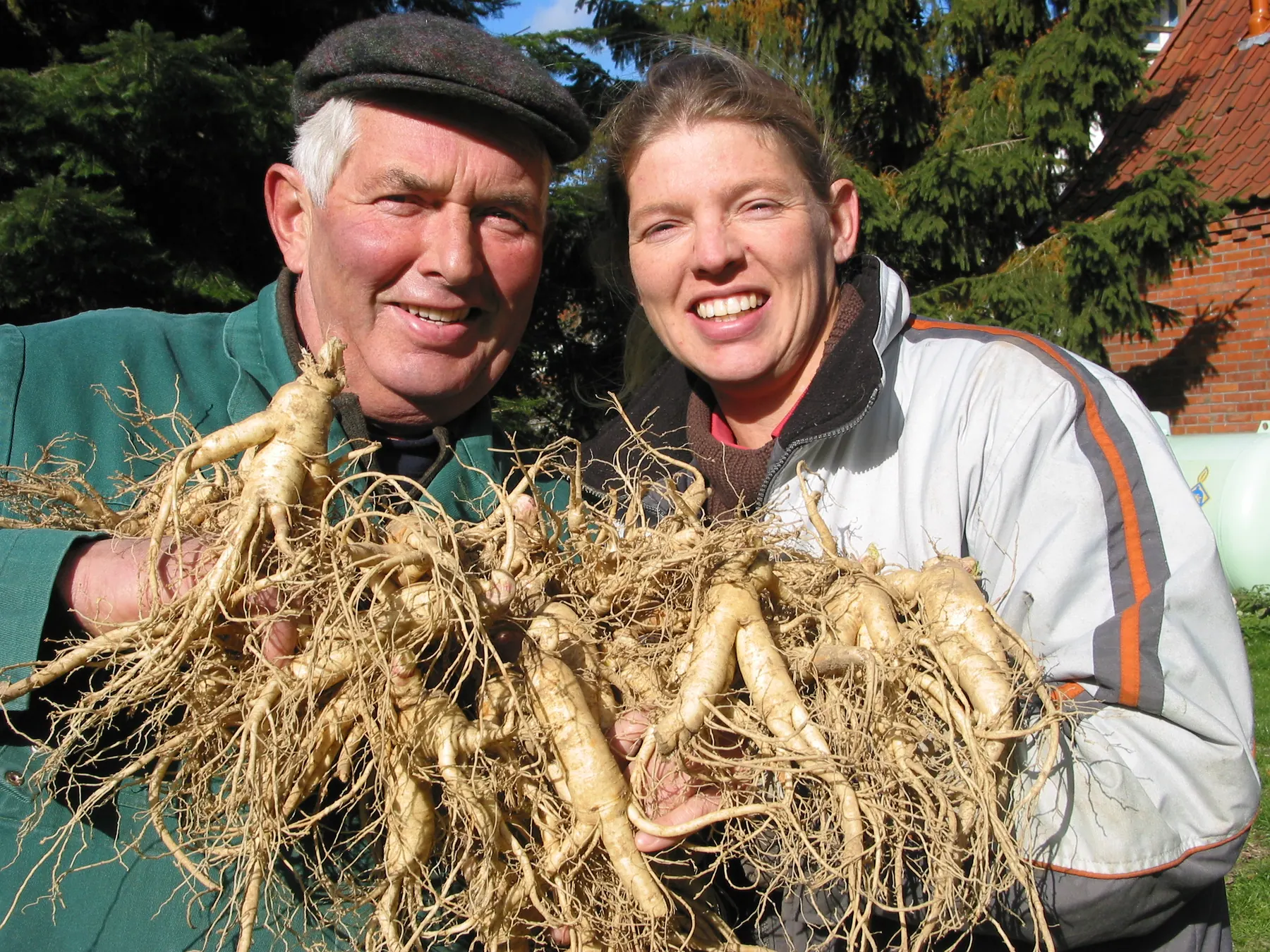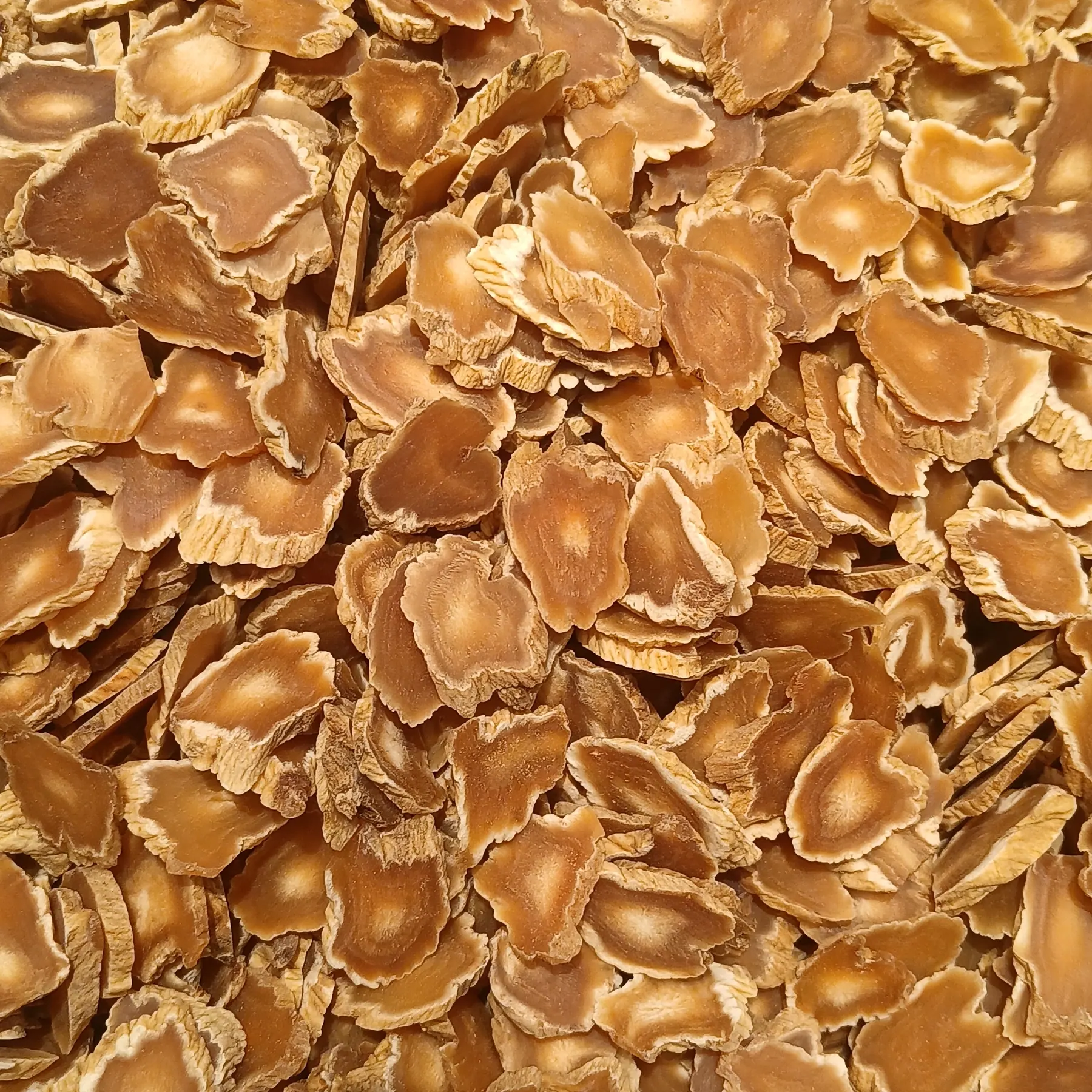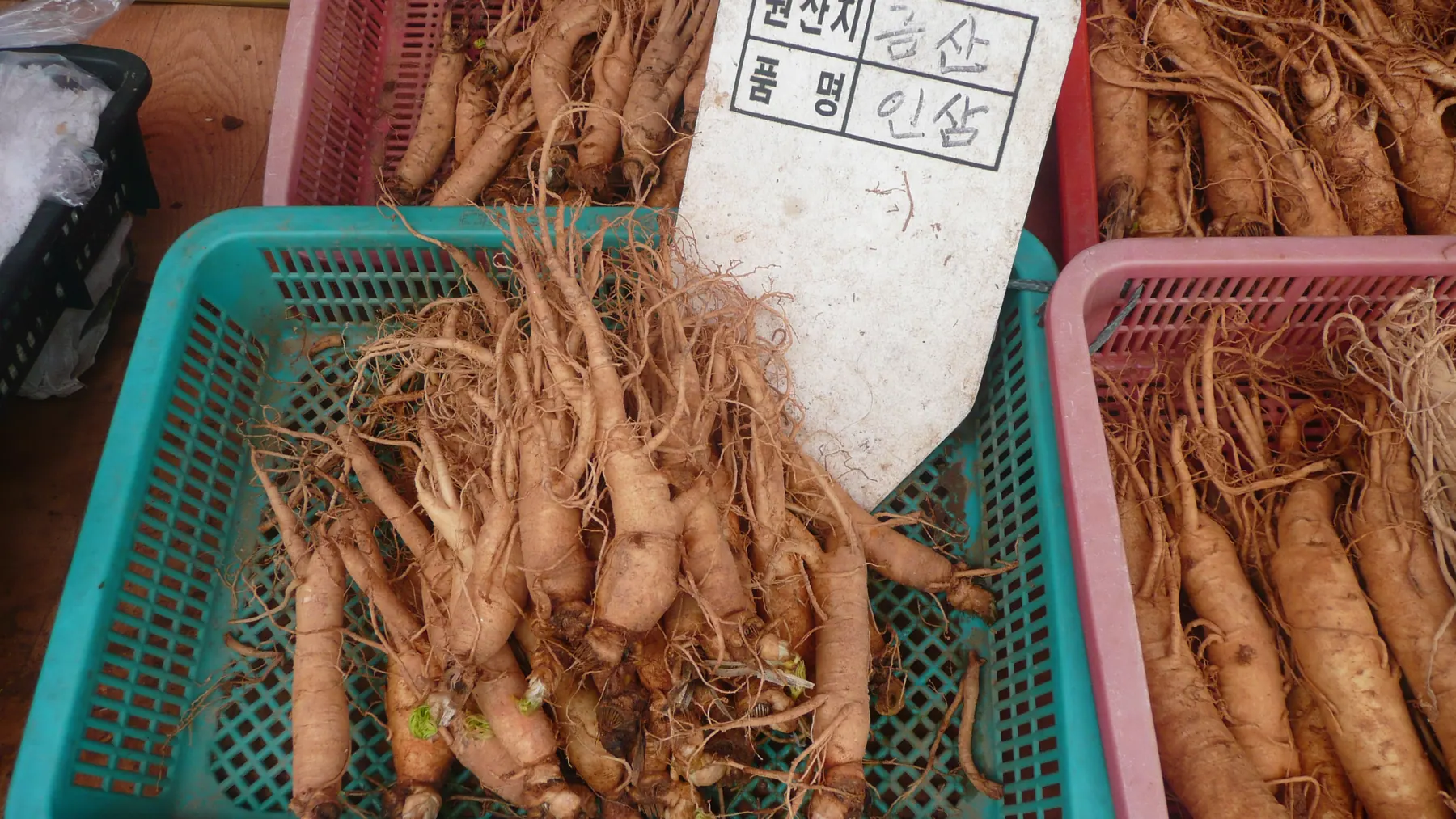
Look for the species (Panax ginseng or Panax quinquefolius), a standardized ginsenoside percentage, and the gram amount per serving. Although an analysis of 25 commercial ginseng products found real products can vary widely from their labeled amounts, a clear species name and a standardized percentage are what bring a bottle close to the benefits in the trials.
Check the Species First
Panax ginseng, also called Korean or Asian ginseng, and Panax quinquefolius, American ginseng, are different plants with different studied effects. Most of the fatigue, erectile function, and immune research on this site used Panax ginseng specifically, often the red, steamed form. Although a label that just says "ginseng" without a species leaves the plant unclear, a named Panax ginseng on the label points you to that research. See Korean vs American ginseng for how the two compare, and for the strengths each species brings.
Look for a Standardized Ginsenoside Percentage
Ginsenosides are the compounds thought to drive most of ginseng's effects, and a standardized extract guarantees a measured percentage of them, batch to batch. Although a landmark analysis of 25 commercial ginseng preparations found that ginsenoside concentrations varied 15-fold in capsules and 36-fold in liquids compared with what the label claimed, every product was correctly identified as genuine ginseng (Harkey 2001). A standardized extract, typically labeled with a percentage such as 5 percent ginsenosides, is the closest a consumer product gets to matching what a clinical trial actually used.
Once you find a brand you trust, its bottles stay consistent. A 2004 study bought two lots of five popular herbs, ginseng among them, from nine supplement makers and sent them to an independent lab (Krochmal 2004). The two lots from each maker matched closely, so a standardized brand delivers the same ginseng bottle after bottle.
Standardized Extracts Carry Many of the Trials
Many of the best known Panax ginseng trials used one standardized extract, G115. A 2020 review traced five decades of G115 on the market and found standardization is what keeps its quality the same from batch to batch (Bilia 2020). The 1996 flu vaccine trial gave 100 mg of G115 a day for 12 weeks (Scaglione 1996), and the focus trials gave single doses of 200 to 400 mg (Reay 2005). A standardized label lets you line your capsule up with those exact amounts.
Match the Form to Your Reason for Taking It
Red ginseng, white ginseng, and American ginseng show up differently across the research: red ginseng dominates the erectile function studies, while both forms appear in fatigue and cognition research. If you are shopping for a specific benefit, checking which form the underlying studies used puts that benefit in reach. See red vs white ginseng and ginseng benefits for which form backs which use, and for the strengths those forms have shown.
Red ginseng is also easy to confirm by its chemistry. A 2018 analysis of 66 ginsenosides named six, including Rg3, Rg5 and Rk1, as markers that set red ginseng apart from white (Zhou 2018). A maker that lists those steaming compounds is giving you the red ginseng profile behind the trials.
Fermented Red Ginseng Is Absorbed Faster
Your gut bacteria turn the large ginsenosides in red ginseng into smaller ones the body absorbs, chiefly compound K. A 2020 study of 34 adults found the people whose gut bacteria made the most compound K absorbed the most of it (Kim 2020). Fermented red ginseng does that step before you swallow it. In a 2022 crossover trial of 16 men, 6 grams of fermented red ginseng delivered a compound K peak 69 times higher than plain red ginseng (Shin 2022), so a fermented label puts more of those compounds in your blood.
Check the Gram Amount per Serving
Trials on fatigue generally used 1 to 2 grams a day, erectile function trials used 1.8 to 3 grams a day of red ginseng, and single dose cognitive studies used 200 to 400 mg. Compare the label's serving size against these ranges so a product's suggested dose sits in the studied range that produced the results. The 2013 fatigue trial of 90 people found 1 to 2 grams a day brought a real lift within four weeks (Kim 2013), a clear target for your label. See ginseng dosage for the full breakdown, and for the amounts tied to each benefit.
Capsules and Standardized Tablets Stay Steadier
Although the 2001 analysis found variability was worse in liquid ginseng products than in capsules, with eleutheroside markers (found in the related but different plant Siberian ginseng) varying up to 200-fold in liquids (Harkey 2001), capsules and tablets from reputable, standardized manufacturers tend to be the more consistent option. That consistency is what keeps the dose close to the one the trials used.
Third Party Testing Is a Good Sign
Because label accuracy has historically been inconsistent industry wide, a product that has been tested by an independent, third party lab and displays that on the label or the company's site is a meaningful reassurance. That extra check is a good sign the bottle matches the ginseng you mean to take.
Panax Ginseng Carries the Ginsenosides
Although Siberian ginseng, a different plant, Eleutherococcus senticosus, is sometimes marketed alongside true ginseng and does not contain ginsenosides at all (Harkey 2001), a Panax ginseng product is the one that carries the fatigue, erectile function, and immune evidence, and that species name is the detail worth finding on the shelf.
A Simple Checklist
Put together, the label questions worth asking are: does it name the species (Panax ginseng or Panax quinquefolius, not just "ginseng" or a different plant entirely), does it state a standardized ginsenoside percentage, does the gram amount per serving fall within the ranges the research actually used, and does the form (red, white, or extract) match the benefit you are after. A product that answers all four clearly on its label is ready to deliver the species, dose, and form the research used.
What Users Report
Although a cheaper, unstandardized product did not seem to do much, experienced buyers learned to check for a standardized percentage and a named species, and many settle on a specific brand once they find one that works. Consistency batch to batch is what the research above shows a standardized label can offer. Although a few people have compared two products with the same gram amount and felt a clear difference, that difference is exactly why a standardized percentage matters, and the brand they stick with is the one that brings the steadier energy they wanted.
Safety Notes
Although people who use blood thinners, diabetes medication, or MAOIs can mention ginseng to a doctor, side effects with properly identified ginseng products look similar to placebo and are usually mild (Coon and Ernst 2002). A standardized, well labeled product makes that conversation straightforward, and people tolerate properly identified ginseng well.
For the full introduction to the herb, see what Panax ginseng actually does. A named species, a standardized percentage, and a studied dose are how a bottle lines up with the benefits in the trials.
References
- Harkey MR et al. 2001. Variability in commercial ginseng products: an analysis of 25 preparations. Am J Clin Nutr.
- Krochmal R et al. 2004. Phytochemical Assays of Commercial Botanical Dietary Supplements. Evid Based Complement Alternat Med.
- Bilia AR, Bergonzi MC. 2020. The G115 standardized ginseng extract: an example for safety, efficacy, and quality of an herbal medicine. J Ginseng Res.
- Scaglione F et al. 1996. Efficacy and safety of the standardised ginseng extract G115 for potentiating vaccination against the influenza syndrome and protection against the common cold. Drugs Exp Clin Res.
- Reay JL et al. 2005. Single doses of Panax ginseng (G115) reduce blood glucose levels and improve cognitive performance during sustained mental activity. J Psychopharmacol.
- Zhou QL et al. 2018. Development and validation of a UFLC-MS/MS method for simultaneous quantification of sixty-six saponins and their six aglycones: Application to comparative analysis of red ginseng and white ginseng. J Pharm Biomed Anal.
- Kim JK et al. 2020. Effects of gut microbiota on the pharmacokinetics of protopanaxadiol ginsenosides Rd, Rg3, F2, and compound K in healthy volunteers treated orally with red ginseng. J Ginseng Res.
- Shin MB et al. 2022. Pharmacokinetic Comparison of Ginsenosides between Fermented and Non-Fermented Red Ginseng in Healthy Volunteers. Pharmaceutics.
- Kim HG et al. 2013. Antifatigue effects of Panax ginseng C.A. Meyer: a randomised, double-blind, placebo-controlled trial. PLoS One.
- Coon JT, Ernst E. 2002. Panax ginseng: a systematic review of adverse effects and drug interactions. Drug Saf.
Nothing here is medical advice, and people who take prescription medication can mention ginseng to a doctor while they enjoy a root that has supported energy and vitality for centuries.