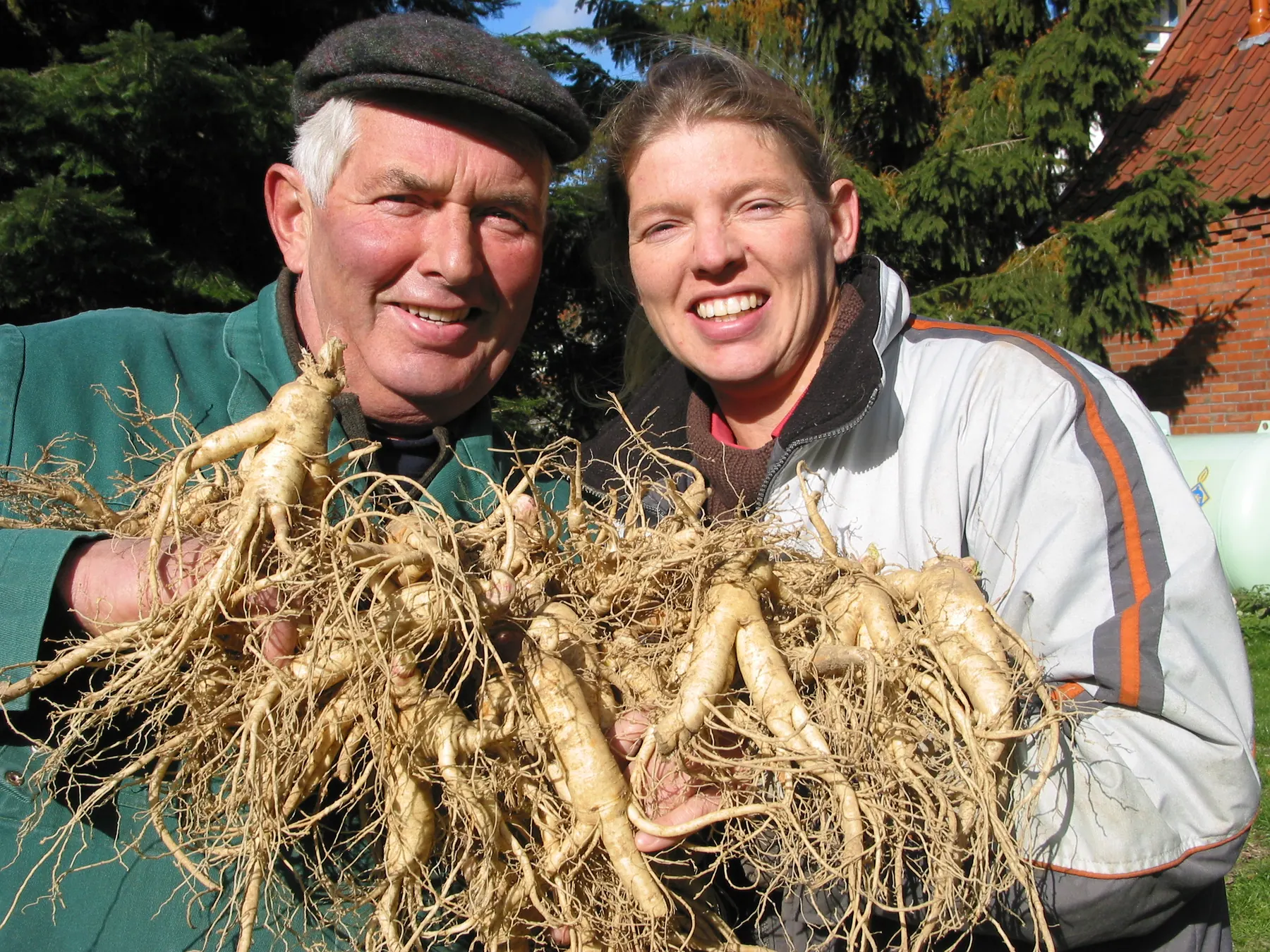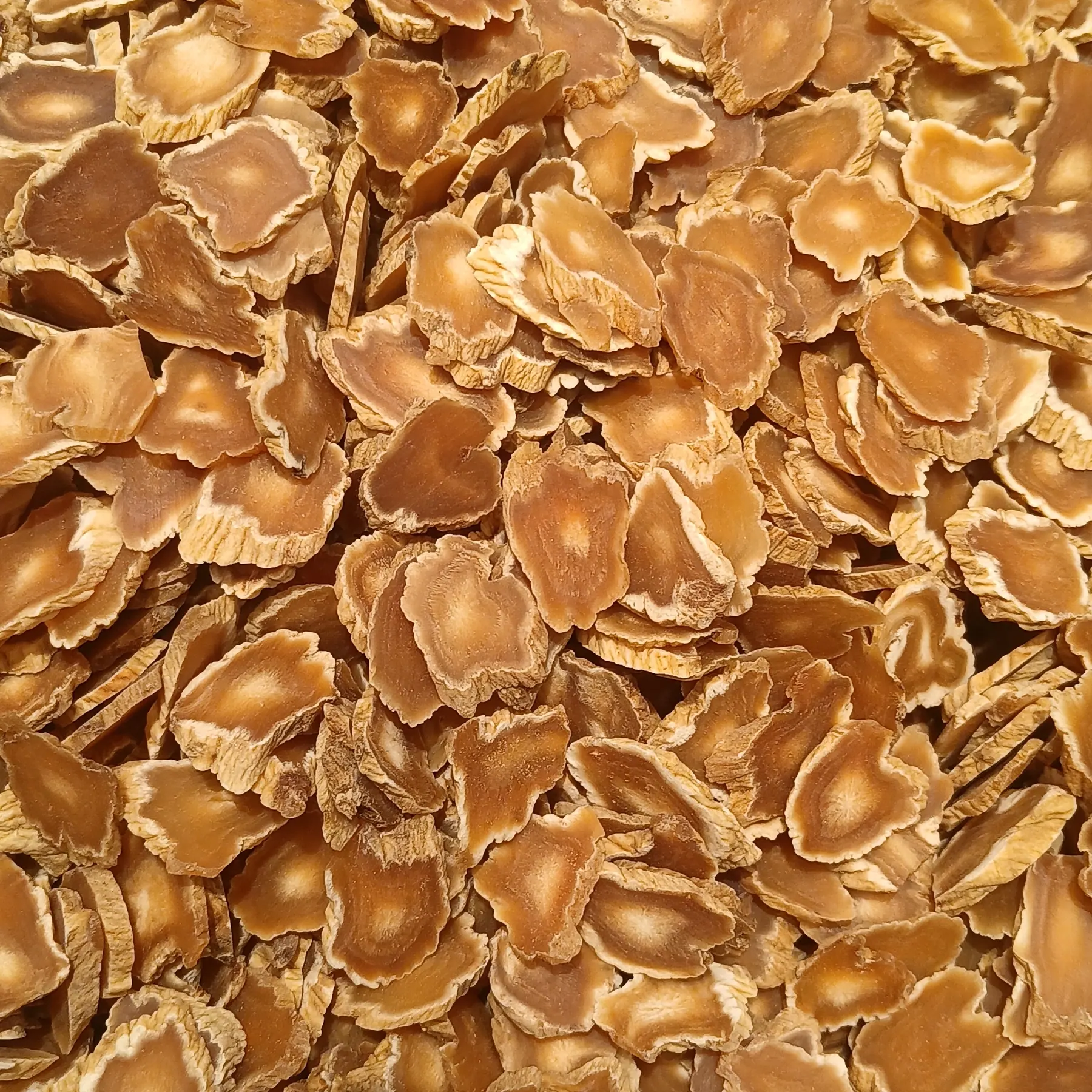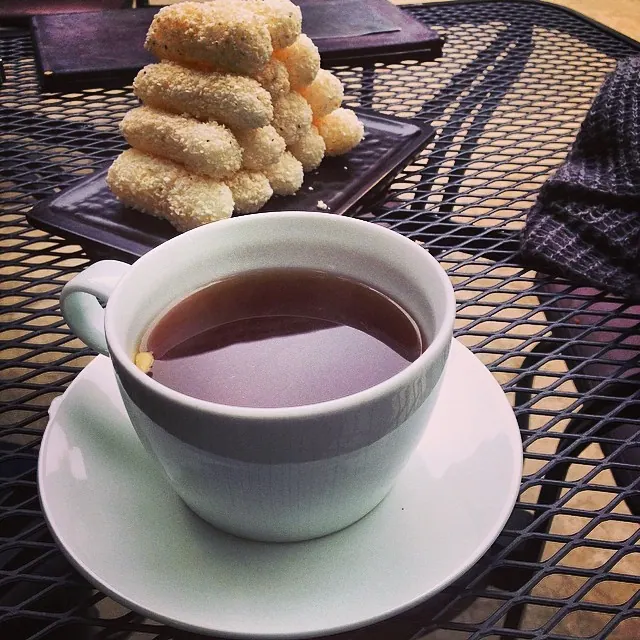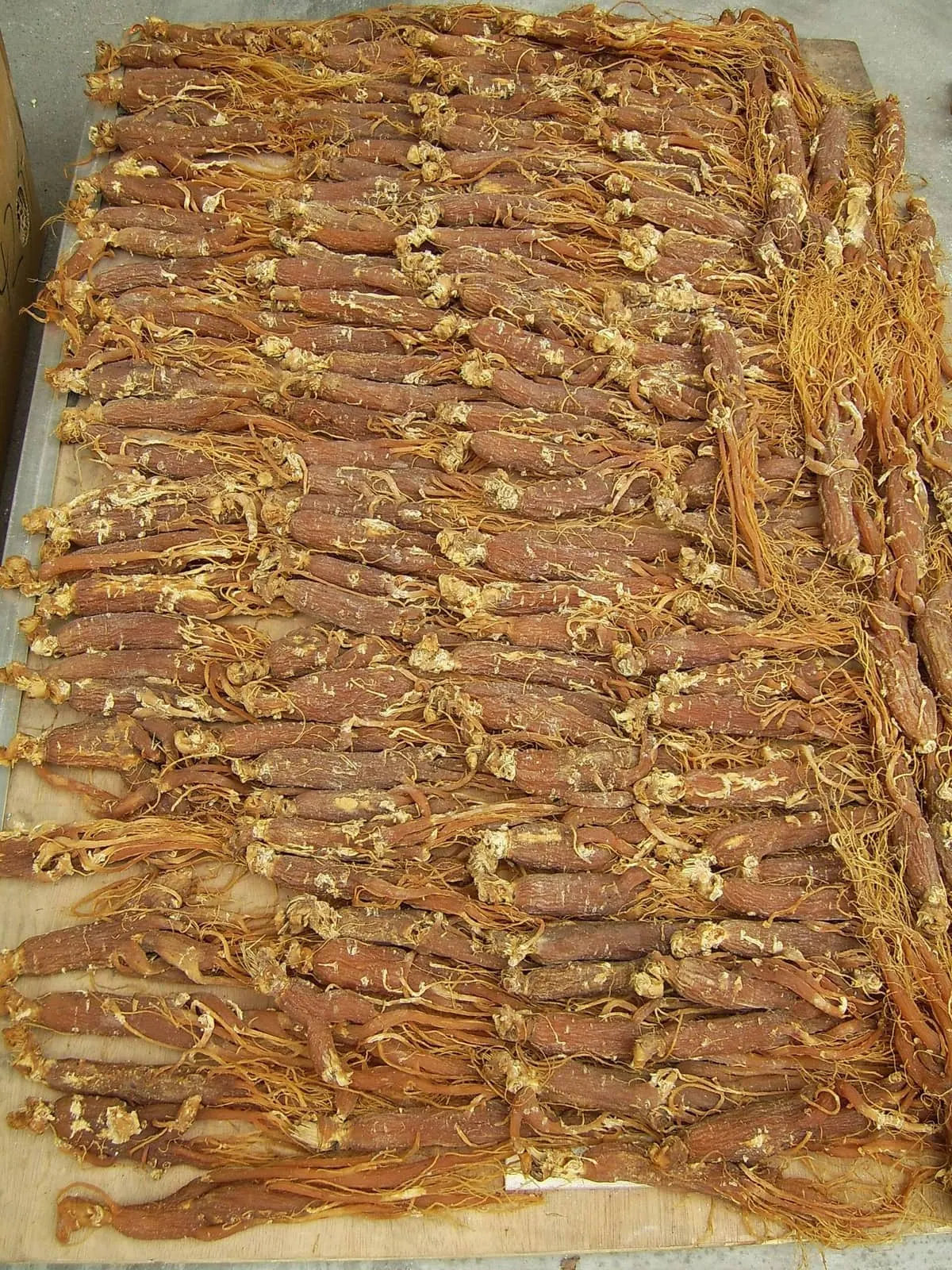
Red and white ginseng come from the same plant, Panax ginseng. White ginseng is the fresh root simply air dried, while red ginseng is steamed before drying, a step that changes its mix of active compounds called ginsenosides and gives it a reddish brown color, denser texture, and longer shelf life.
The Only Real Difference Is Processing
Both forms start as the same root. White ginseng is peeled and air dried shortly after harvest, keeping its chemistry close to the fresh plant. Red ginseng is steamed under controlled heat before drying, without peeling, and a phytochemistry review found this steaming step is the entire reason the two forms differ, transforming naturally occurring ginsenosides into new heat formed compounds and darkening the root's color (Wang 2024). Up to 57 distinct ginsenosides have been identified in red ginseng specifically, more than in the unprocessed root, reflecting how much steaming reshapes the chemistry.
Steaming Reshapes the Ginsenoside Mix
Although researchers do not treat white and red ginseng as interchangeable in study design, and although both forms come from the same plant, a 2018 review comparing white and red ginseng directly found their different ginsenoside profiles translate into different effects on immune signaling in lab and animal models (He 2018). Some heat formed ginsenosides that appear during steaming are found only in red ginseng, which is part of why the steamed root has its own clinical record.
Steaming creates compounds the raw root does not have. A 2000 study steamed Panax ginseng at 100 to 120 °C and found ginsenosides Rg3, Rg5 and F4, absent from raw ginseng, appeared during steaming (Kim 2000). At 120 °C, Rg3 and Rg5 made up 39 and 19 percent of all ginsenosides, and the steamed root relaxed blood vessels and scavenged free radicals more strongly.
A 2019 comparison of white, red and black ginseng found white ginseng richer in the primary ginsenosides such as Rg1 and Rb1, and red ginseng richest in variety (Zhu 2019). A 2018 analysis of 66 ginsenosides named six, including Rg3, Rg5 and Rk1, as the markers that set red ginseng apart (Zhou 2018). Each form brings its own full set of compounds to your daily dose.
Red Ginseng Leads the Human Trials
If you compare the citations across this site, you will notice red ginseng shows up disproportionately in human trials, especially for erectile function and antioxidant activity. Researchers have more often chosen the steamed form for clinical study, particularly in Korea, where red ginseng is the traditional preparation. See ginseng for erectile dysfunction for a benefit studied almost exclusively in red ginseng's steamed form.
The red ginseng record now spans many benefits. A 2002 crossover trial of 45 men found 2.7 grams a day of Korean red ginseng for 8 weeks improved erections in 60 percent of them (Hong 2002). A 2012 trial found 3 to 6 grams a day for 8 weeks raised antioxidant enzymes and lowered DNA damage (Kim 2012). A 2008 trial in 19 people with type 2 diabetes found 6 grams a day for 12 weeks lowered blood sugar after a glucose drink by 8 to 11 percent on top of usual treatment (Vuksan 2008).
The list keeps growing. A 2016 trial of 62 adults with borderline high blood pressure found 5 grams a day of red ginseng for 12 weeks lowered systolic pressure by 6.5 and diastolic pressure by 5.0 mm Hg (Cha 2016). A 2012 trial of 100 healthy adults found 24.5 percent caught a respiratory illness on red ginseng against 44.9 percent on placebo (Lee 2012). A 2020 trial of 438 people with colorectal cancer found 2,000 mg a day for 16 weeks eased tiredness during chemotherapy (Kim 2020).
The steaming compounds work fast too. A 2014 crossover trial gave 23 healthy adults 400 mg of red ginseng enriched in Rg3, the signature steaming compound, and central systolic pressure fell by 5.0 mm Hg within 3 hours (Jovanovski 2014).
Stability and Shelf Life
Steaming also affects practical shelf life. The processing step is partly a preservation method, developed historically to let the root be stored and transported longer without spoiling, alongside its effect on chemistry. This is part of why red ginseng became the dominant traditional export form from Korea, and why the steamed root travels so well.
Black Ginseng Adds Another Steamed Profile
A third, less common form exists: black ginseng, made by steaming and drying the root multiple times, sometimes starting from white or red ginseng. A phytochemical comparison found black ginseng's compound profile differs again from both white and red ginseng, the result of even more extensive heat processing (Wang 2024). Although black ginseng is far less studied in human trials than red ginseng, that extra steaming still shows how heat keeps reshaping the root, and red ginseng remains the form with the deepest clinical record on this site.
White Ginseng Brings Its Own Strengths
White ginseng shares the root's long record. A 2021 four week crossover trial gave elderly adults a red ginseng preparation, a white ginseng preparation and placebo in turn (Dimpfel 2021). Both forms changed brain wave activity during memory and attention tasks, and the authors found red and white gave similar benefits for thinking, each by its own route.
Reading a Label for Form
Because "red ginseng" and "white ginseng" describe processing rather than a fixed potency, a label that specifies the form tells you more than one that just says "Panax ginseng extract." If a specific studied benefit, like erectile function, matters most to you, matching the label's form to what the underlying research used is a reliable guide to the result you want. See how to choose a ginseng supplement for more on reading labels, and for the details that connect a bottle to the trials.
Match the Form to the Benefit
Although most human research has studied one form or the other, and although there is no evidence that one form is generally superior across the board, the right choice is the form behind the benefit you want. Matching red or white ginseng to that benefit is how the clinical results line up with what you take. For dosing details across both forms, see ginseng dosage.
What Users Report
Although preferences vary and many people say they cannot reliably tell the two apart by feel alone, longtime users often describe red ginseng as stronger or warming, in line with the traditional Korean preparation, and others describe white ginseng as gentle for daily use. A number of people who have tried both settled on red ginseng once they learned most of the research behind a benefit they cared about used that form. These are user impressions rather than measured differences, and the chemistry above is a reliable guide to the strengths steaming adds.
Safety Notes
Although people who use blood thinners, diabetes medication, or MAOIs can mention either form to a doctor, both forms show similar safety profiles in the available research, with side effects that look similar to placebo and are usually mild (Coon and Ernst 2002). People tolerate red and white ginseng well, and both forms share that long record of daily use.
A 2022 trial of 180 adults found 6 weeks of red ginseng extract left head, face and body temperature steady, so the steamed root's warming reputation comes with a comfortable, well tolerated course (Park 2022).
For how Korean ginseng compares to the American species, see Korean vs American ginseng, and for the full introduction to the herb, what Panax ginseng actually does. Red and white both come from a root people have trusted for centuries, and steaming gives red ginseng the compounds behind its clinical record.
References
- Wang CZ et al. 2024. Phytochemistry of Red Ginseng, a Steam-Processed Panax ginseng. Am J Chin Med.
- He M et al. 2018. The Difference between White and Red Ginseng: Variations in Ginsenosides and Immunomodulation. Planta Med.
- Kim WY et al. 2000. Steaming of ginseng at high temperature enhances biological activity. J Nat Prod.
- Zhu L et al. 2019. Comparative Analysis of Ginsenosides and Oligosaccharides in White Ginseng (WG), red Ginseng (RG) and Black Ginseng (BG). J Chromatogr Sci.
- Zhou QL et al. 2018. Development and validation of a UFLC-MS/MS method for simultaneous quantification of sixty-six saponins and their six aglycones: Application to comparative analysis of red ginseng and white ginseng. J Pharm Biomed Anal.
- Hong B et al. 2002. A double-blind crossover study evaluating the efficacy of korean red ginseng in patients with erectile dysfunction: a preliminary report. J Urol.
- Kim JY et al. 2012. Beneficial effects of Korean red ginseng on lymphocyte DNA damage, antioxidant enzyme activity, and LDL oxidation in healthy participants: a randomized, double-blind, placebo-controlled trial. Nutr J.
- Vuksan V et al. 2008. Korean red ginseng (Panax ginseng) improves glucose and insulin regulation in well-controlled, type 2 diabetes: results of a randomized, double-blind, placebo-controlled study of efficacy and safety. Nutr Metab Cardiovasc Dis.
- Cha TW et al. 2016. Blood pressure-lowering effect of Korean red ginseng associated with decreased circulating Lp-PLA2 activity and lysophosphatidylcholines and increased dihydrobiopterin level in prehypertensive subjects. Hypertens Res.
- Lee CS et al. 2012. Preventive effect of Korean red ginseng for acute respiratory illness: a randomized and double-blind clinical trial. J Korean Med Sci.
- Kim JW et al. 2020. Korean red ginseng for cancer-related fatigue in colorectal cancer patients with chemotherapy: A randomised phase III trial. Eur J Cancer.
- Jovanovski E et al. 2014. Effect of Rg3-enriched Korean red ginseng (Panax ginseng) on arterial stiffness and blood pressure in healthy individuals: a randomized controlled trial. J Am Soc Hypertens.
- Dimpfel W et al. 2021. Effects of Red and White Ginseng Preparations on Electrical Activity of the Brain in Elderly Subjects: A Randomized, Double-Blind, Placebo-Controlled, Three-Armed Cross-Over Study. Pharmaceuticals (Basel).
- Park SI et al. 2022. KGR-BG1, a Standardized Korean Black Ginseng Extract, Has No Significant Effects on Head or Face Temperature Compared with Korean Red Ginseng Extract and a Placebo. J Med Food.
- Coon JT, Ernst E. 2002. Panax ginseng: a systematic review of adverse effects and drug interactions. Drug Saf.
Nothing here is medical advice, and people who take prescription medication can mention ginseng to a doctor while they enjoy a root that has supported vitality for centuries.