You can reclaim your edge by understanding the active compounds in your supplement. Panax ginseng has been used for centuries to support vitality. By reading the ginsenoside content on your label, you ensure you receive the specific strengths of the root.
Identify the Active Ginsenosides
Ginsenosides are the primary bioactive compounds that drive the performance of the root. These compounds have been studied for their positive effects on the nervous system (Tam 2018). You want a label that specifies these active constituents to ensure potency.
Different ginsenosides offer different strengths. Ginsenoside Rh1 is a major compound extracted from red ginseng that supports cognition and physical health (Tam 2018). This specific compound provides antioxidant and immunomodulatory effects (Tam 2018).
Many users say they feel more alert when the label lists standardized ginsenosides. This standardization ensures a consistent dose of the root's strength. You can find more about these options in our guide on how to choose a ginseng supplement.
The pharmacological action of the root is linked to the specific patterns of these components. A 2024 review identified 549 studies on pharmacology and 262 studies on chemical components to clarify these mechanisms (Ito 2024). This extensive research helps you identify the most potent labels. You can use this data to select a product that supports your physical health.
Look for Rg3 for Cardiovascular Support
Some labels highlight Rg3, a bioactive component of processed Korean ginseng. This specific ginsenoside is known for vasodilatory effects. It helps you maintain a healthy circulatory system.
A 2026 randomized trial of 90 adults with early-stage hypertension found that 40 mg per day of Rg3-enriched ginseng significantly reduced systolic blood pressure (Oh 2026). The same study found that diastolic blood pressure decreased in both the vitamin C-treated white ginseng and enzyme-treated red ginseng groups (Oh 2026). These results support the use of Rg3 for blood pressure management (Oh 2026).
You can use this information to target your heart health. High Rg3 levels are a hallmark of processed red ginseng. This processing method enhances the root's traditional strength.
The effectiveness of Rg3 is seen in its impact on mean arterial pressure. A 2026 trial found that mean arterial pressure decreased significantly in both the VTWG and ETRG groups compared with placebo (Oh 2026). This result confirms the strength of Rg3 for blood pressure management. You can rely on this specific ginsenoside to support your circulatory performance.
Verify the Standardization Percentage
Standardization means the manufacturer guarantees a specific percentage of ginsenosides in every dose. A label stating 4% or 5% ginsenosides provides a concrete measure of quality. This prevents you from buying a product with low active content.
Standardized extracts allow you to compare different brands accurately. You can match the milligram amount to the percentage to find the actual ginsenoside weight. This precision helps you get your edge back.
Quality standards for the root are maintained through these rigorous specifications (Hong Kong Chinese Materia Medica Standards). Following these standards ensures the identity and purity of the root.
Standardization ensures you receive the bioactive compounds used in clinical trials. Many users say that a clear percentage on the label correlates with a more noticeable effect on their energy. This transparency allows you to verify the potency of the extract. You can trust a standardized label to provide the root's traditional strength.
Choose the Right Dose for Energy
The amount of ginsenosides you take determines the effect on your energy. High doses are often used to fight severe fatigue. This allows you to maintain performance during demanding periods.
A 2015 prospective study of 30 patients with cancer-related fatigue used a high dose of 800 mg of Panax ginseng daily (Yennurajalingam 2015). The study found that 87% of evaluable patients improved their fatigue scores by day 15 (Yennurajalingam 2015). This high-dose approach also improved appetite and sleep at night (Yennurajalingam 2015).
You can adjust your dose based on your goals. For general vitality, lower standardized doses are common. For more intense recovery, higher doses are a traditional strength.
High doses of the root are used to improve overall well-being. A 2015 study of 30 patients found that the mean ESAS score for well-being improved from 4.67 to 3.50 after taking 800 mg daily (Yennurajalingam 2015). This improvement helps you regain your daily vitality. You can use these high doses to fight age-related decline.
Match the Label to Cognitive Goals
If you want to sharpen your mind, look for labels that support cognitive function. Panax ginseng is widely used to enhance mental performance. This helps you stay focused as you age.
A 2010 meta-analysis of nine randomized trials suggested that ginseng improves some aspects of cognitive function and quality of life (Geng 2010). Another 2025 open-label study of 25 healthy older adults found that a multi-herbal tablet containing Panax ginseng significantly improved working memory (Tiralongo 2025). These results show a reduction in errors during spatial working memory tasks (Tiralongo 2025).
You can find more on this in our guide for ginseng for a sharper brain as you age. Selecting a product with a proven ginsenoside profile supports these mental gains.
The impact of the root on memory is a key benefit for older adults. A 2025 study of 25 healthy older adults found that errors in the Paired Associate Learning task reduced by 7.9 (Tiralongo 2025). This reduction in errors shows a clear improvement in working memory. You can choose a label that targets these cognitive strengths.
Understand Processing and Purity
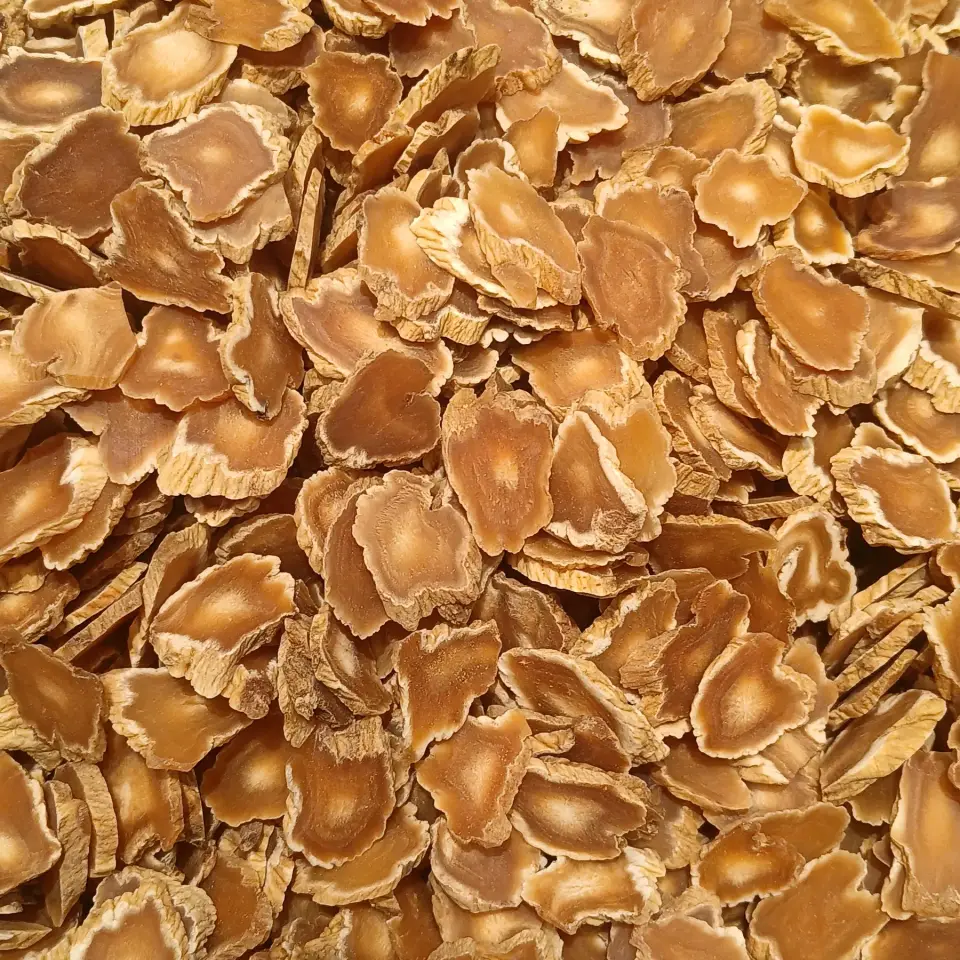
The label may specify "red" or "white" ginseng, which refers to how the root was processed. Red ginseng is steamed and dried to alter the ginsenoside profile. This process is used to increase certain bioactive strengths.
Korean red ginseng is traditionally used for health improvement. A 2021 randomized trial of 60 patients with allergic rhinitis found that Korean red ginseng significantly improved rhinorrhea and nasal itching (Jung 2021). The study also found a significant decrease in total IgE levels (Jung 2021).
They provide a concentrated source of vitality.
The processing of the root affects its impact on inflammatory reactions. A 2021 trial of 60 patients found that Korean red ginseng significantly decreased serum IL-4 levels and eosinophil counts in nasal smears (Jung 2021). This result shows the strength of red ginseng in managing allergic symptoms. You can select processed labels to target these specific benefits.
Maximize Your Vitality
Reading the label allows you to select the exact ginsenoside profile you need. Whether you seek the blood pressure support of Rg3 or the cognitive boost of Rh1, the label is your map. This ensures you get the full performance of the root.
The root is recognized for its traditional use in treating tiredness and weakness (EMA HMPC herbal monographs). It is well tolerated and used globally to restore vigor (Memorial Sloan Kettering About Herbs).
By choosing standardized extracts, you secure a consistent path to higher energy. You can combine this knowledge with our guide on ginseng dosage to optimize your routine. This is how you get your edge back.
References
- Tam DNH et al. 2018. Ginsenoside Rh1: A Systematic Review of Its Pharmacological Properties. Planta Med.
- Geng J et al. 2010. Ginseng for cognition. Cochrane Database Syst Rev.
- Oh JH et al. 2026. Effects of Two Rg3-Enriched Korean Ginseng Preparations on Blood Pressure in Adults with Early-Stage Hypertension: A Randomized, Double-Blind, Placebo-Controlled Trial. Nutrients.
- Jung JH et al. 2021. The Effect of Korean Red Ginseng on Symptoms and Inflammation in Patients With Allergic Rhinitis. Ear Nose Throat J.
- Yennurajalingam S et al. 2015. High-Dose Asian Ginseng (Panax Ginseng) for Cancer-Related Fatigue: A Preliminary Report. Integr Cancer Ther.
- Tiralongo E et al. 2025. Does a Polyherbal Medicine Enhance Cognition in Healthy Older Adults? An Exploratory Open-Label Study. J Integr Complement Med.
- Memorial Sloan Kettering About Herbs. Ginseng (Asian), About Herbs.
- EMA HMPC herbal monographs. Ginseng radix, EMA herbal monograph.
- Hong Kong Chinese Materia Medica Standards. Hong Kong Chinese Materia Medica Standards, Volume 1: Radix Ginseng.
- Ito H et al. 2024. Recent trends in ginseng research. J Nat Med.
Nothing here is medical advice, and anyone on prescription medication can mention ginseng to a doctor while enjoying a root people have trusted for centuries.